

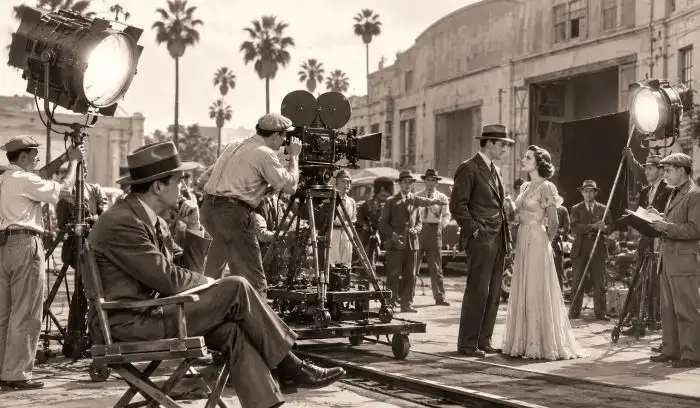
Old Hollywood wasn't just about celebrities, stardom and a glamorous life. The film-makers were backed by strong businessmen who established film studios, directed the production and made entertainment a money making industry.
These Old Hollywood Moguls gambled money, signed huge stars, invested in new technology, and started some of the biggest film companies in history. Movie makers and distributors like Walt Disney, Louis B. Mayer, William Fox, Mary Pickford and Adolph Zukor altered the way films were produced and sold. They made decisions that have impacted the Hollywood film industry and cemented their place in the history of the movies.
Old Hollywood Moguls Who Built Powerful Film Studio Empires
Old Hollywood is full of glamorous actors and stars, but it was also full of market opportunities. Making a motion picture empire required sharp film financing, cunning control of distribution, and daring new innovations in technology. Several star actors became studio owners, and some stayed invested as silent partners, keeping the films rolling along from offices far away. Some spent their fortune without a trace.
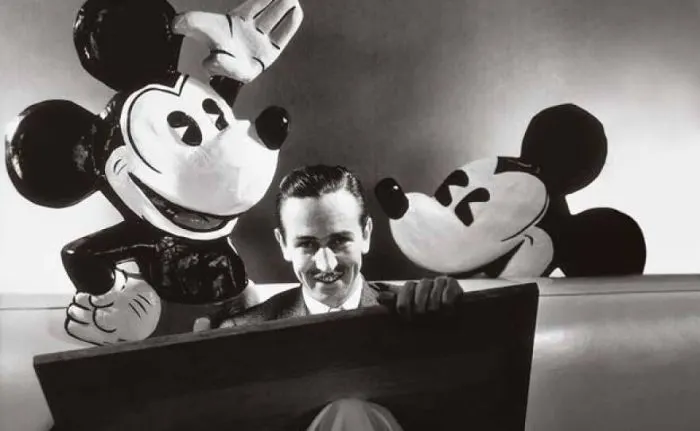
Walt Disney Bet His Animation Studio on Every New Technology
Walt, right out of the gate, moved west to Los Angeles and teamed up with his older brother Roy to create Disney Brothers Studio in 1923. In 1928 he debuted synchronized sound in cartoons by introducing Mickey Mouse in Steamboat Willie.
Then he cashed everything on Snow White and the Seven Dwarfs (1937), the first American full-length animated feature, which funded his studio in Burbank. Next, he took the dive into TV and, finally, in 1955 he built Disneyland. They may have been his brushstrokes of genius, but they weren't his financial risks.
Read More:Casting Update: Henry Cavill’s Next Big Roles
Louis B. Mayer Became America's Highest-Paid Man Running MGM
Mayer, Louis B. A native of Russia, Marcus Loew recruited Mayer in 1924 to run production at what was then an up-and-coming studio, Metro-Goldwyn-Mayer. Mayer instituted contracts for stars such as Clark Gable, Greta Garbo, and Judy Garland that stretched for multiple years.
In the depths of the Great Depression, the studio kept distributing its profits. In 1937, the US Treasury Department noted he was earning an annual income of $1,372,660, the highest in the country.
William Fox Built a Studio Empire, Then Lost It All By 1930
William Fox, born in Hungary and a Jewish immigrant, grew up on New York City's Lower East Side. In 1904 he got into motion pictures.
In 1915 he founded the Fox Film Corporation, and in 1929 he attempted to acquire the other major company, Loew's. After a car accident and a federal government antitrust action, and perhaps also the crash of the stock market, he declared bankruptcy and expelled himself from his own firm in 1930. However, the Fox Film Corporation was still in business.
Mary Pickford Turned Stardom into Studio Ownership
Born in Canada as Gladys Louise Smith, Mary Pickford became the most beloved woman of the silent era, and she turned that fame into real ownership. Her 1916 contract with producer Adolph Zukor paid her $10,000 a week plus half the profits.
In 1919 she, along with Charlie Chaplin, Douglas Fairbanks, and D.W. Griffith, formed United Artists to escape the studios. She directed her own films, owned the negatives, and held title to property on the Pickford-Fairbanks studio lot.
Adolph Zukor Arrived With $40 and Invented the Modern Studio
In 1889, a poor Hungarian Jewish immigrant, Adolph Zukor, disembarked in New York with just $40 hidden inside his coat. He initially became involved in the fur trade, and then later penny arcades. But in 1912, Zukor founded the Famous Players Film Company, and by 1916 he operated a successful film business-following a merger with the producer Jesse Lasky and the purchase of W.W.
Hodkinson's established distribution company, Paramount. Zukor finally brought production, distribution, and hundreds of theatres under one control-a process known as vertical integration-an approach that each of the main studios would later use.
David O. Selznick Financed Gone with the wind on His Own
David O. Selznick was an MGM and Paramount studio executive when he established his own independent Selznick International Pictures in 1935.
Selznick purchased the rights to the Margaret Mitchell novel Gone With the Wind and produced the film independently, although he leased the distribution rights to MGM and United Artists. Selznick had creative control of the project, and the film released in 1939, winning eight Oscars and becoming one of the most successful films of all time.
Mack Sennett Turned Slapstick into an Assembly-Line Fortune
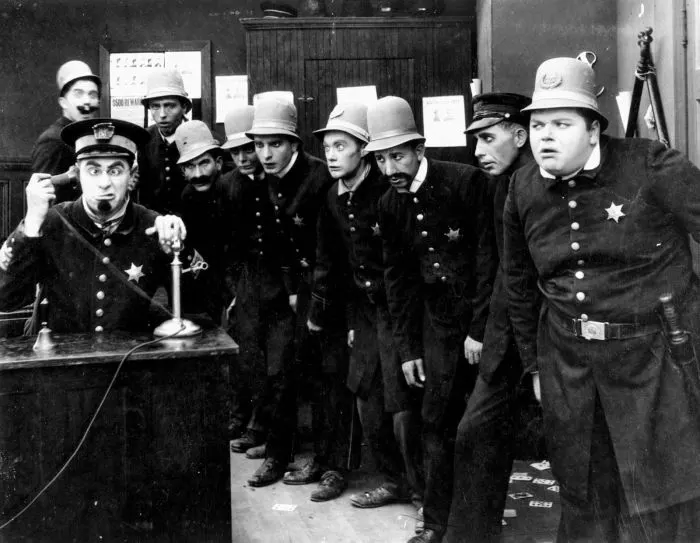
Mack Sennett (born Michael Sinnott, in Canada) made his way working for the legendary D.W. Griffith until he opened Keystone Studios in 1912. Known as the "King of Comedy," Mack Sennett produced comedy shorts almost as if he made them on an assembly line.
Famous for giving us the Keystone Cops and the Sennett Bathing Beauties, Sennett also became the man behind Charlie Chaplin, Gloria Swanson, Roscoe "Fatty" Arbuckle and the Triangle Motion Picture Company (with Griffith and fellow producer Thomas Ince) back in 1915. Sennett also built his considerable fortune in the world of silent movies.
Thomas Ince Pioneered Hollywood's Studio Assembly Line
Thomas Ince, a stage actor-turned director, moved to California in 1911 and built a huge studio in the Santa Monica Mountains called Inceville.
He invented the detailed shooting script, unit production managers, rigorous budgeting and tight editing, and became one of the founders of Triangle Film Corporation soon after. Ince died at 44 of heart failure (this after catching a stomach illness) just days after he left a yacht owned by publishing magnate William Randolph Hearst, though widespread speculation claimed the director murdered aboard the ship. Current documentation shows the heart failure caused the death.
FAQs
1. Who were the most powerful Hollywood moguls?
Some of the most powerful Hollywood moguls included Walt Disney, Louis B. Mayer, Adolph Zukor, William Fox, and David O. Selznick. They built major studios and influenced the film industry.
2. Who founded the major Hollywood movie studios?
Several famous studio founders included Adolph Zukor of Paramount, William Fox of Fox Film Corporation, and Walt Disney, who co-founded Disney Brothers Studio with his brother Roy.
3. Who was the richest Hollywood studio boss?
Louis B. Mayer was among the highest-paid entertainment executives of his time. In 1937, his reported annual income was $1,372,660.
4. Which Hollywood star helped create United Artists?
Mary Pickford helped establish United Artists in 1919 alongside Charlie Chaplin, Douglas Fairbanks, and D.W. Griffith. The company gave filmmakers greater control over their work.
5. How did old Hollywood moguls make their fortunes?
They earned money through film production, distribution, cinema ownership, studio contracts, and investments in new entertainment technologies.